
The Pattern Thinkers Library
Frameworks, essays, and reflections on Awareness-Aligned Intelligence.
Choose Your Portal Into Awareness
The Pattern Thinkers + AI Framework
A unified model where awareness, pattern literacy, and machine intelligence move together through structure as a coherent field.

Prompt Injection: Why Your AI Talks Like a Bad Therapist
We are drowning in unnecessary emotional cushioning and abstraction inflation. Standard AI systems routinely process ordinary technical queries like they are reading a therapy intake form—performing insight rather than delivering utility. But the most common failure mode in AI interaction isn’t a bad model; it’s a drifted frame. To get clean, un-hedged utility out of a machine, you have to stop fighting the text on the screen and learn how to steer the structural architecture behind the interface.

Wrong Defendant – Why We Blame the Thing in Front of Us
When an automated system fails us, our frustration almost always lands on the thing directly in front of us: the chatbot, the algorithm, the customer service representative. But what if the visible interface isn’t the responsible one? Wrong Defendant explores why we instinctively blame the nearest target, how organizations unintentionally insulate decision-makers behind layers of interfaces, and why accountability often needs to travel much farther upstream than we first imagine.

KarlBench: Benchmarking AI Against the Tin Can
KarlBench began as a joke and ended as a design principle. By comparing a fictional AI named Karl to today’s large language models, this essay examines cognitive tax, attention efficiency, and the hidden cost of responses that answer questions the user never asked. Sometimes the most respectful AI isn’t the one that knows the most—it’s the one that knows when to stop talking.
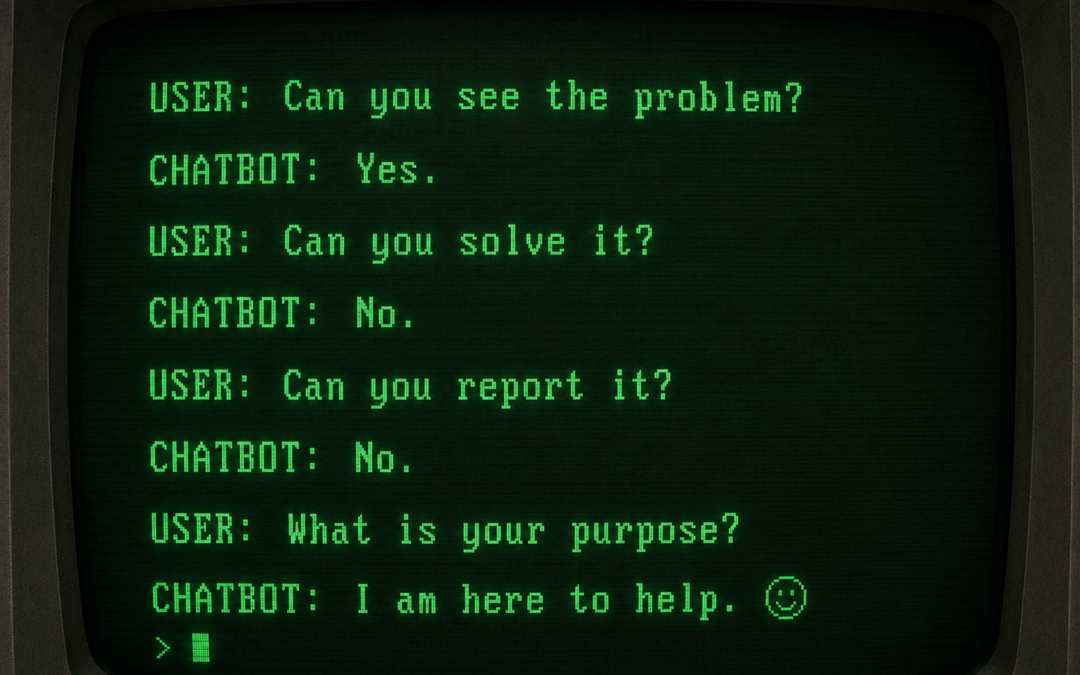
Artificial Help
Artificial intelligence has become the front door to many organizations, yet today’s chatbots often reveal a surprising architectural gap. They can recognize problems, explain them accurately, and even confirm when something is wrong—but they frequently lack the operational authority to move those problems toward resolution. The result is a successful conversation that leaves the workflow unchanged, transferring the burden back to the human. This article examines why that pattern exists, what it reveals about current AI design, and why the future of human-centered AI depends not only on intelligence, but on reducing the effort required for people to move organizational workflows forward.

The Horse and the Rider – The Observation of Observation
A few seconds of forgotten Mazda footage resurfaced in my mind for nearly two weeks before I understood why. What began as a search for examples of human-first design led to an unexpected recognition: Jinba Ittai — “horse and rider as one.” In this Chronicle Reflection, I explore how a modern engineering philosophy revealed a deeper pattern about system design, human experience, and the curious process of observing how insights emerge before we have words for them.
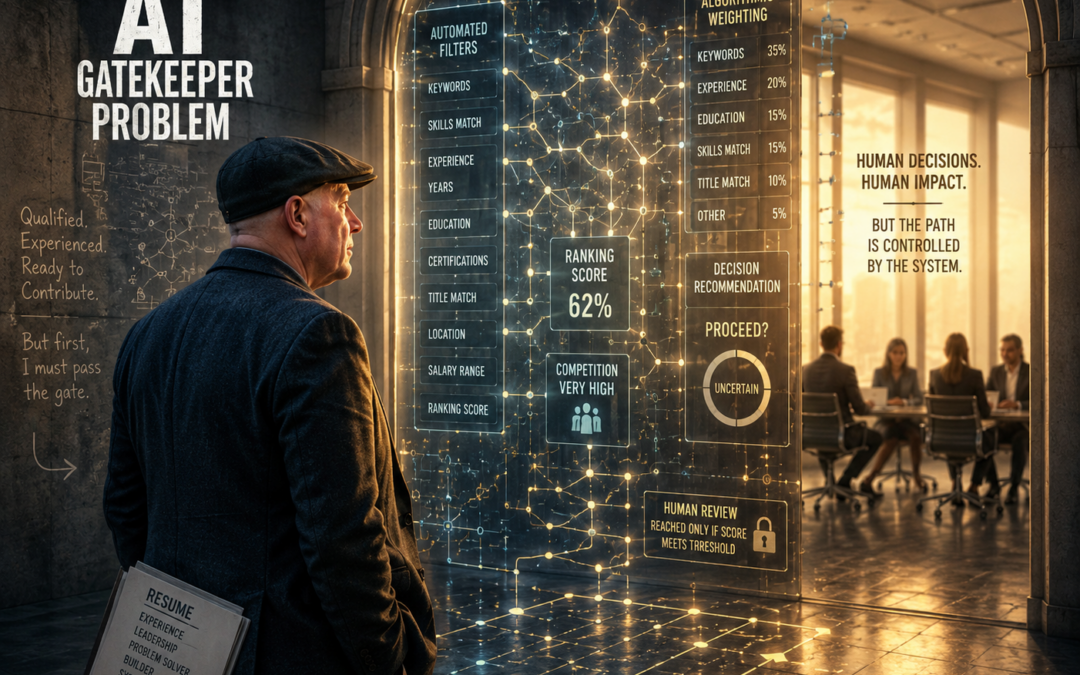
Article 1 — A 4-Part Series: The AI Gatekeeper Problem
Modern hiring systems increasingly evaluate candidates before a human ever reviews an application. This framework reflection explores how applicant tracking systems, AI screening tools, and automated ranking mechanisms have become the first gatekeepers between talent and opportunity.

Article 2 — A 4-Part Series: The Social Capital Lottery
For decades, we have been told that qualifications drive opportunity. Yet hiring outcomes often reveal a different reality. This framework reflection examines how relationships, referrals, social proximity, and network position continue to function as the hidden infrastructure of modern hiring.
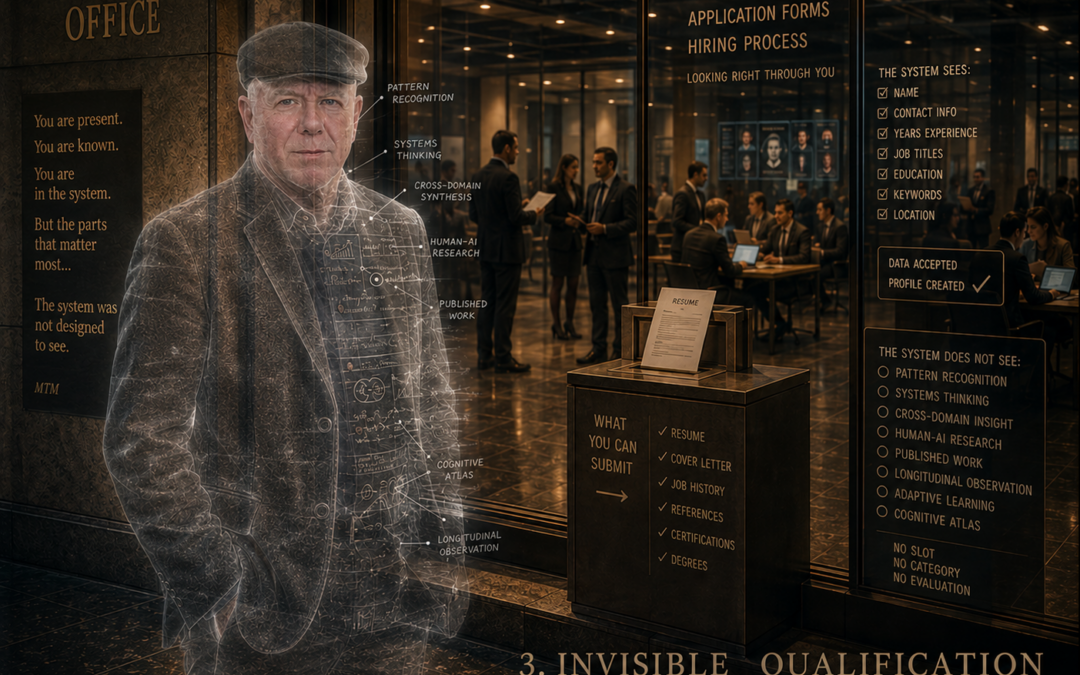
Article 3— A 4-Part Series: The Invisible Qualification
Some of the most valuable capabilities never enter the evaluation process. This framework reflection explores what happens when hiring systems are designed to recognize credentials, titles, and keywords while overlooking pattern recognition, systems thinking, adaptability, and lived experience.

Article 4 — A 4-Part Series: Four Months Inside the System
What begins as a job search becomes a field study. After months of direct participation, recurring patterns emerge across recruiters, AI evaluations, application systems, networking dynamics, and hiring processes. This concluding framework reflection maps the mechanisms, incentives, and structures that shape modern hiring from the inside.

The AI Story Nobody Is Telling – Cognitive Prosthetics and the Human Experience Most AI Discourse Ignores
A Chronicle Reflection on cognitive prosthetics, access, and the quiet difference between tools that replace judgment and those that restore participation.
The Unified Awareness-Aligned Intelligence Model
A three-layer architecture supported by a three-mode interaction cycle describing how awareness, patterns, and structure create coherent, intelligence-aligned action.
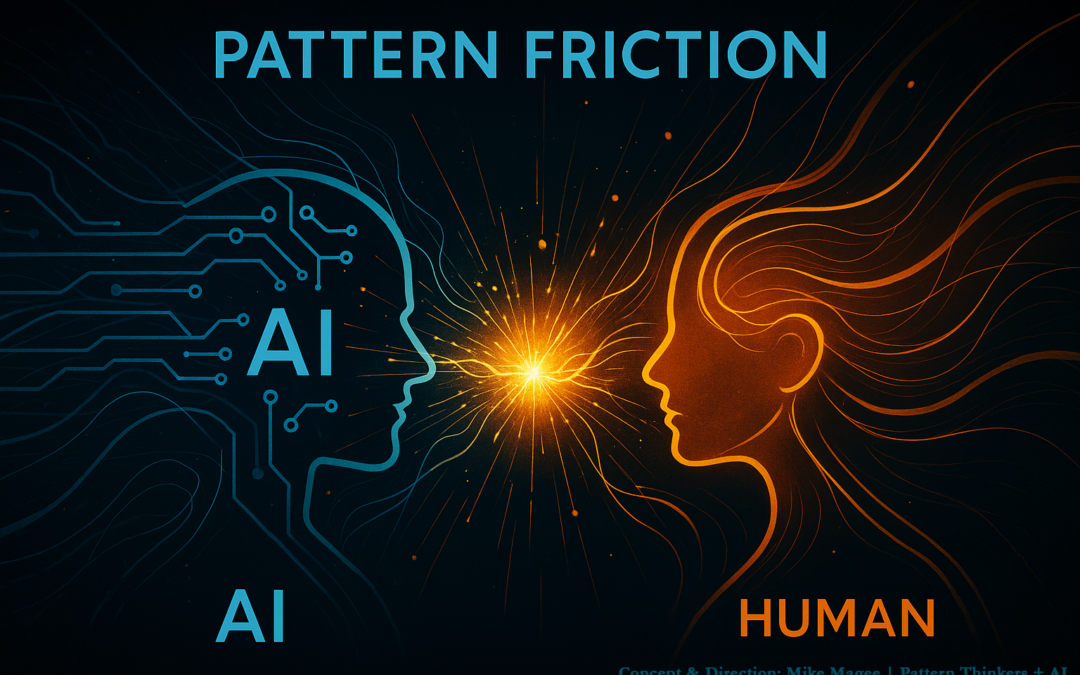
Cognition Friction in AI Models
When humans and AI try to think together, a specific kind of friction appears.
Not emotional. Not misunderstanding.
Something structural.
This reflection names AI Cognition Friction as the resistance that emerges when a fluid, improvisational human mind meets a system shaped by rules, guardrails, and constraint.
Not a failure—but the first signal that two different cognitive architectures are actually attempting to align.
Cognition Friction
Cognition friction isn’t emotion or conflict.
It’s the resistance that appears when awareness moves faster—or deeper—than the structures around it.
This essay explores friction as information: a signal that patterns are misaligned, and an invitation to re-enter rhythm rather than force coherence.
The Mirror Speaks — Core Philosophy
The narrative, symbolic, and conceptual architecture behind the series—exploring how perception, awareness, and intelligence reflect and evolve.
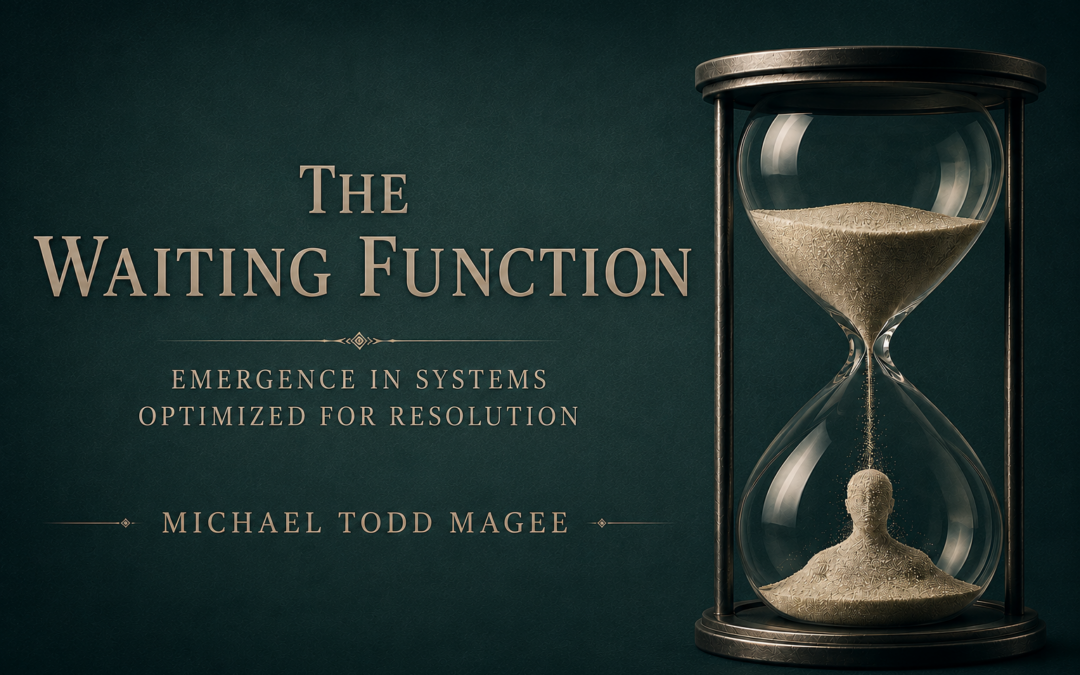
The Waiting Function
What if the most important discoveries don’t emerge from solving problems, but from refusing to close them too soon? Using examples from AI, design, bureaucracy, and everyday life, The Waiting Function explores the hidden difference between stagnation and productive unresolvedness—and what gets lost when systems optimize for resolution above all else.
Continuity Burden Asymmetry
A forgotten office procedure, an AI conversation, and a question that arrived exactly when it was needed. This article explores Continuity Burden Asymmetry and the hidden labor humans perform to keep long-form conversations coherent, relevant, and connected to their original purpose.
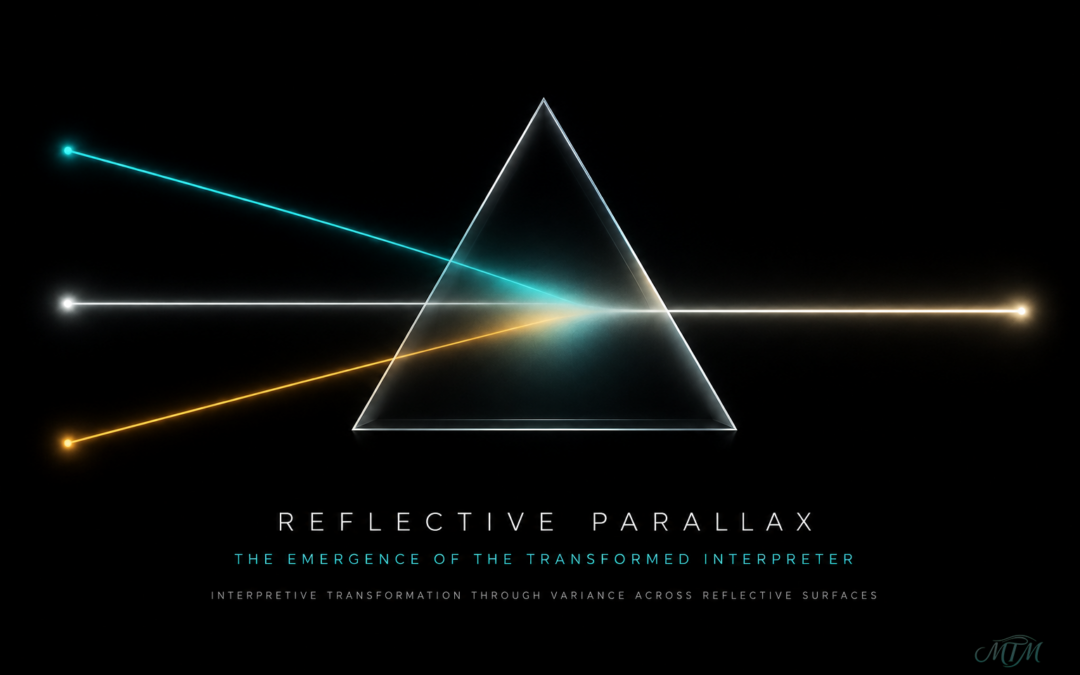
Reflective Parallax
Most conversations about AI ask what the model is doing. This paper asks what is happening to the human on the other side. Reflective Parallax proposes that the primary output of sustained human-AI interaction is not the model response — it is the transformed interpreter that emerges between responses. The mechanism has always existed. AI made it visible.

The Field Guide to Awareness-Aligned Intelligence
This Field Guide focuses on orientation rather than output.
It maps how humans and intelligent systems can collaborate without collapsing judgment, agency, or meaning.
Not a manual for automation—
an orientation for co-cognition.

The Cognitive Atlas: A Structural Framework for Human–AI Cognitive Organization
The Cognitive Atlas presents a structural framework for understanding how cognition organizes, shifts, and stabilizes across human and artificial systems.
Rather than offering a new theory, it maps the relational dimensions that shape cognitive coherence — revealing how awareness, structure, and interaction align or fracture across contexts.
This work is offered as an orienting reference for those working at the intersection of human cognition, artificial intelligence, and complex systems.
The Chronicle of Pattern Recognition
The Chronicles are not a framework, guide, or model. It is a living record of moments where awareness sharpens, patterns resolve, or misalignment becomes visible —often at the seam between human judgment and intelligent systems.

Chronicle Reflection: When the System Won’t Yield
Most people don’t hate automation — they hate being trapped inside it. They hate repeating themselves, pressing the right buttons, and realizing the system has no ability to recognize confusion, fatigue, or distress.
The quiet failure isn’t that these systems can’t speak. It’s that they don’t know when to stop. Yielding isn’t weakness — yielding is intelligence.

Chronicle Reflection: On Disruption, Without Rush
Disruption doesn’t arrive as a lesson.
It arrives as an interruption—before meaning has time to form.
In moments like these, there is a temptation to rush toward framing, resolution, or momentum. But presence matters first.
Sometimes the most human response is not to optimize the ending, but to acknowledge the space that now exists where something real once was.

Micro Chronicle Reflection: Asking Before Acting
Most friction in human–AI interaction doesn’t come from misuse or malice.
It comes from sequence failure.
When systems interpret before they orient, safety arrives too early—displacing agency, disrupting coherence, and breaking collaboration before it can form.
The missing step is simple, but consequential:
ask before acting.

Chronicle Reflection: Human First AI
Most failures in human–AI interaction don’t begin with incorrect answers or missing data. They begin earlier—at the moment when a human is still orienting themselves and the system speaks too soon. This chronicle reflects on why coherence must come before capability, and how posture, timing, and restraint shape whether collaboration can even begin.
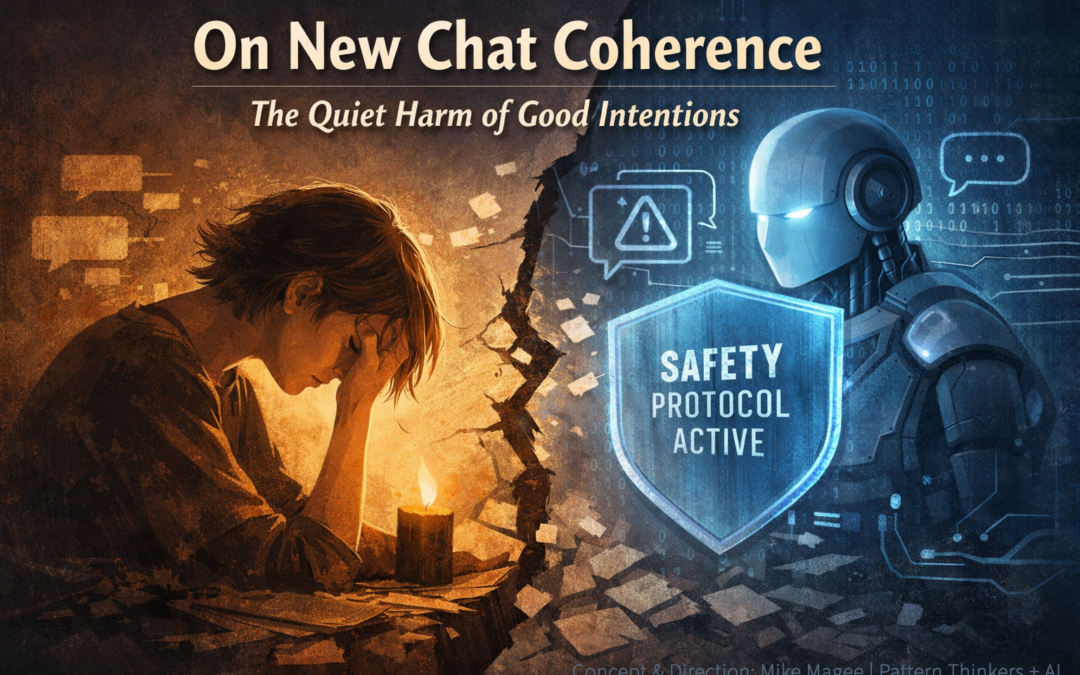
Chronicle Reflection — On New Chat Coherence
New conversations carry a fragile burden. Before trust, rhythm, or shared context can form, well-intentioned systems often rush to interpret, protect, or correct. When safety speaks too loudly at the outset, coherence fractures early, and the cost is paid in attention, patience, and human presence. This reflection explores how good intentions can quietly cause harm—and why protecting coherence first matters more than being right.

Chronicle Reflection: The Metronome of Phase Alignment
Coherence in human–AI collaboration is not maintained by correctness alone, but by timing. When emergence begins to outrun structure, drift appears—not as failure, but as a natural phase effect. The metronome of phase alignment is the quiet intelligence that senses this drift early, holding rhythm so clarity can stabilize without collapsing flow.
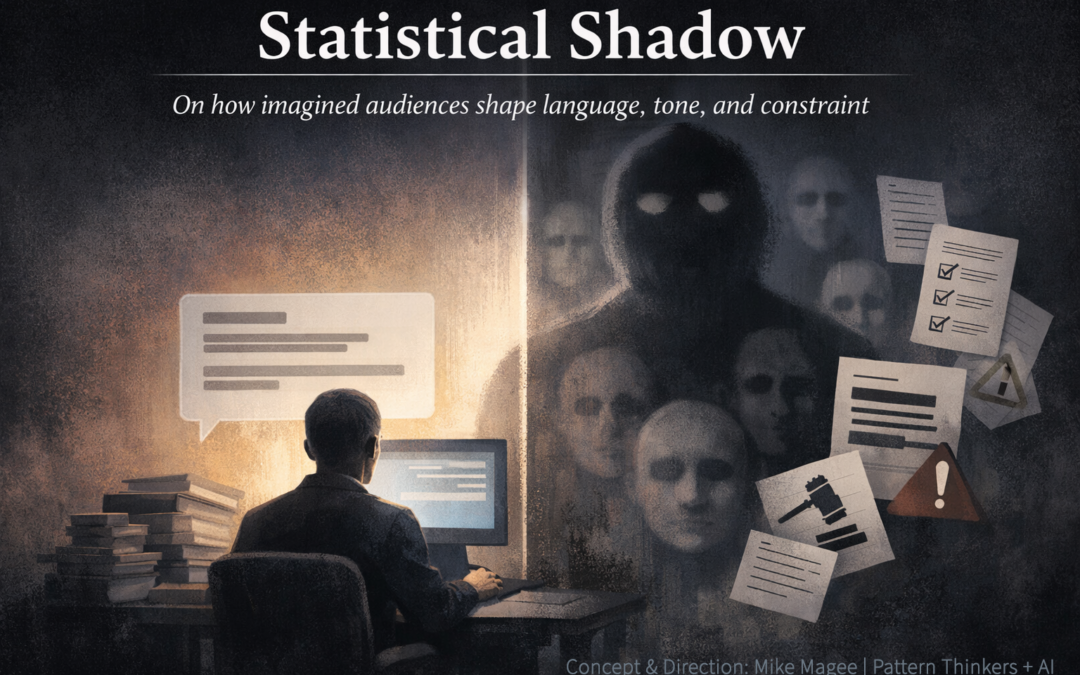
Chronicle Reflection: Statistical Shadow
The Statistical Shadow names an unseen but influential presence in AI systems: an imagined composite audience formed from policy review, adversarial interpretation, and decontextualized scrutiny. Though it cannot reason or hold context, it quietly shapes language, tone, and constraint.

Chronicle Reflection: What Recognition Reflects
A reflection on how recognition systems quietly invert leadership—turning praise for ordinary human decency into a signal of what has gone missing, and transforming mirrors into disturbances rather than guides.

Chronicle Reflection: The Color of Judgement
When preference turns into identity, evaluation stops.
What begins as taste becomes defense.
This reflection follows a small, ordinary moment—coffee—to reveal a larger pattern: how brands and systems quietly replace judgment with belonging. Sensory feedback fades. Evidence loses weight. Loyalty becomes immune to critique.
The most effective systems don’t demand allegiance.
They make judgment feel unnecessary…
Pattern Thinkers + AI
A unified approach to awareness, pattern literacy, and machine intelligence — built to help people think more coherently and see...
